

Starlight Glowing River Dining Table
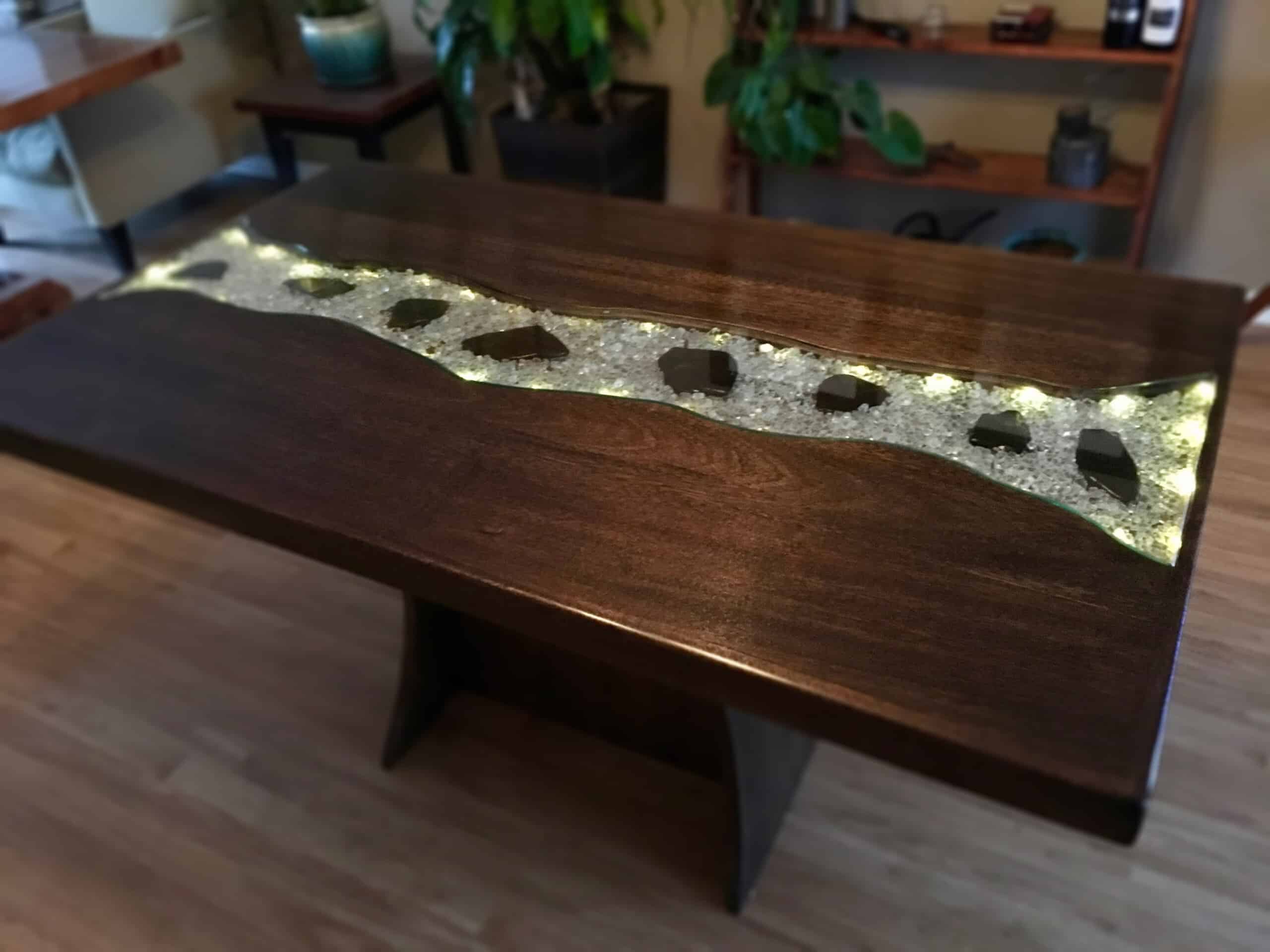
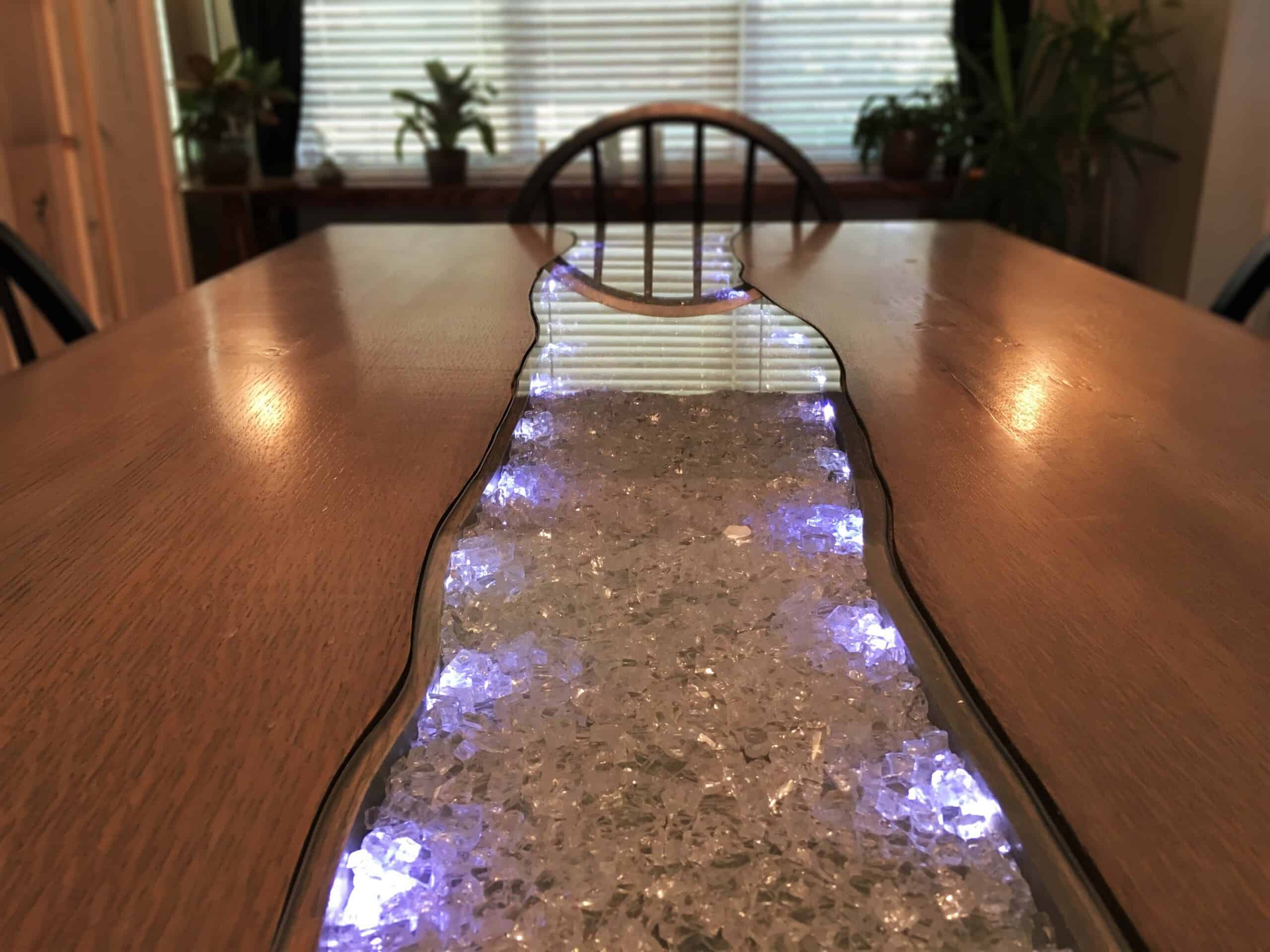
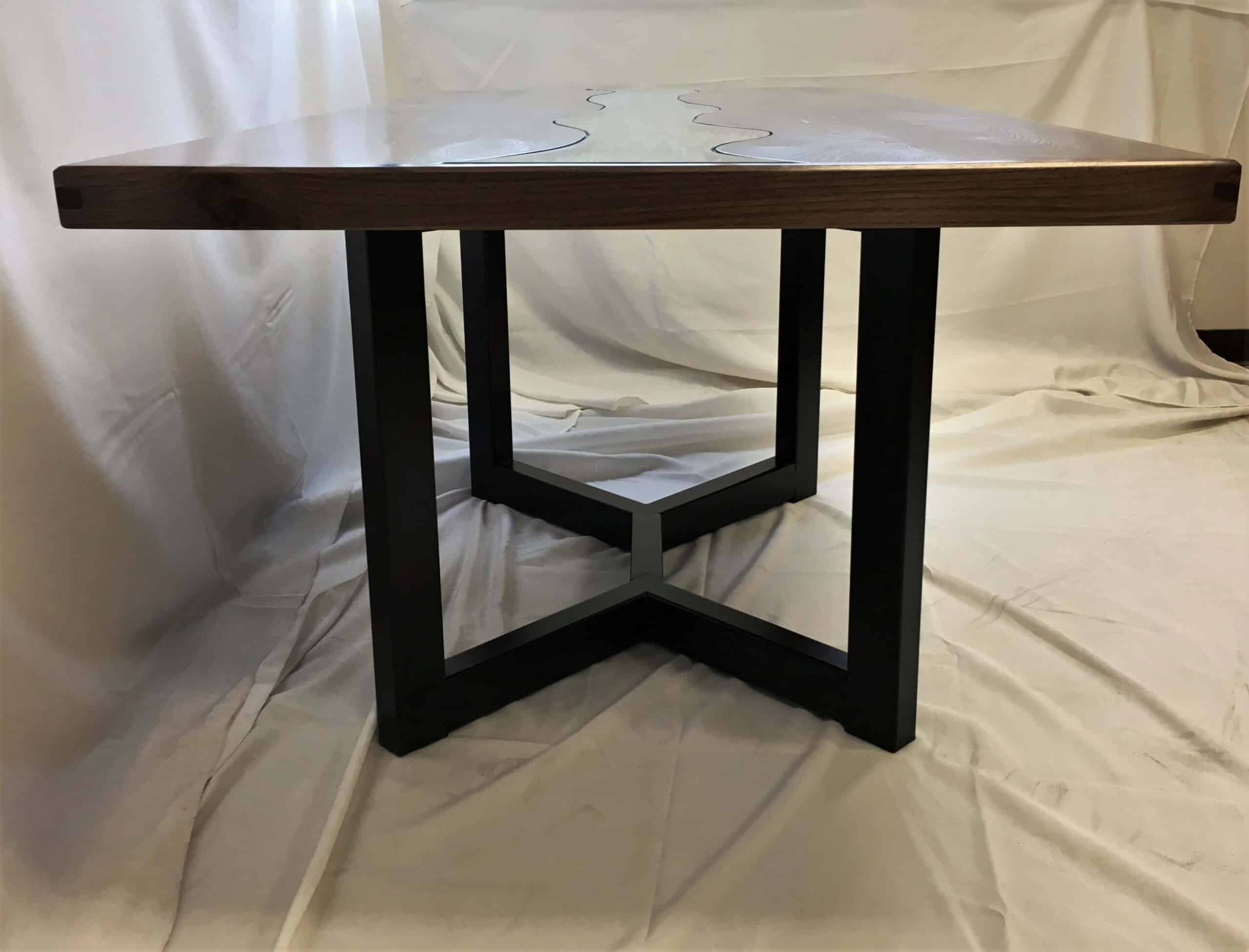
The beautiful and elegant Starlight Glowing Riving Dining Table is the flagship of Great Lakes Design. A profusion of crushed glass sitting below a 1/4 inch thick sheet of crystal clear tempered glass lined with silver LEDs giving the table a wonderful ambient glow. The river channel is 100% independently sealed and the glass is removable for cleaning and redecorating. This one-of-a-kind dining table is truly awe-inspiring and sure to become the center piece of your space! Multiple wood and base/leg options are available.
The first shown Starlight Glowing River Dining Table is 60″ x 36″ x 30″ and is fashioned from White Oak with a satin clear finish and carbon steel with an oil-rubbed finish. Also shown in Mahogany and Walnut.
Order Piece
Interested in the piece you see above? We would love to talk about making one for you. Please fill out the form below and we will contact you during normal business hours to plan your piece and prepare a quote. If you would like to include a photograph for reference or any other helpful details, please visit our main order form here…
 Quercus alba, the white oak, is one of the preeminent hardwoods of eastern and central North America. It is a long-lived oak, native to eastern and central North America and found from Minnesota, Ontario, Quebec, and southern Maine south as far as northern Florida and eastern Texas. Although called a white oak, it is very unusual to find an individual specimen with white bark; the usual color is a light grey. The name comes from the color of the finished wood. Specimens have been documented to be over 450 years old. Strong, beautiful, rot-resistant, easy to work, and economical: white oak represents an exceptional value to woodworkers. It’s no wonder that the wood is so widely used in cabinet and furniture making. Connecticut’s state quarter was minted with a picture and inscription of a famous white oak, the Charter Oak. In 1687, a cavity within the tree was used as a hiding place for the Connecticut Charter of 1662 to prevent its confiscation by the British.


